

AFM-sMIM Characterization of the Recombination-Enhancing Buffer Layer for Bipolar Degradation Free SiC MOSFETs|面向无双极退化 SiC MOSFET 的复合增强缓冲层 AFM-sMIM 表征研究
Rosine Coq Germanicus, Tanguy Phulpin, Kimmo Niskanen, Alain Michez, Ulrike Lüders
Abstract
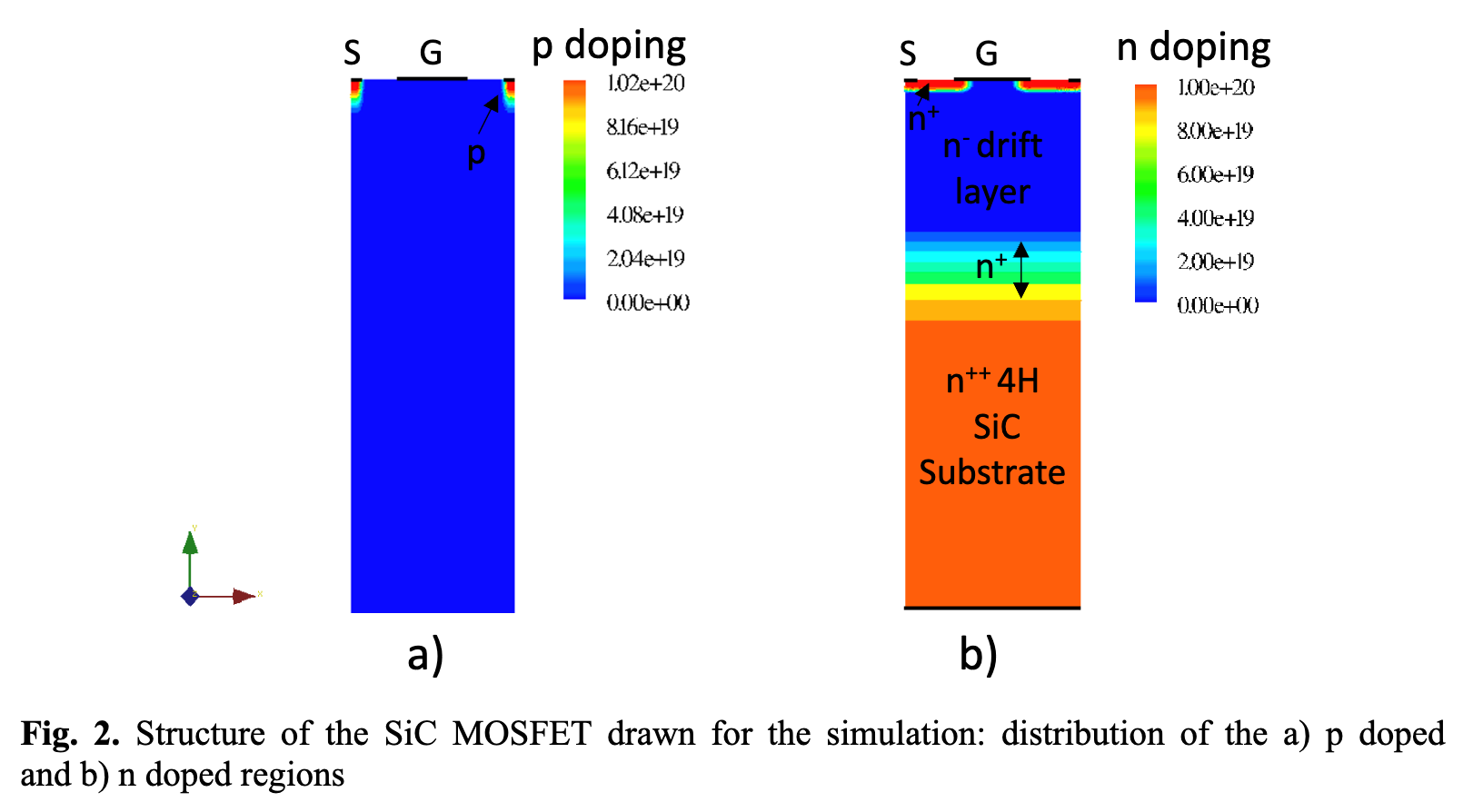
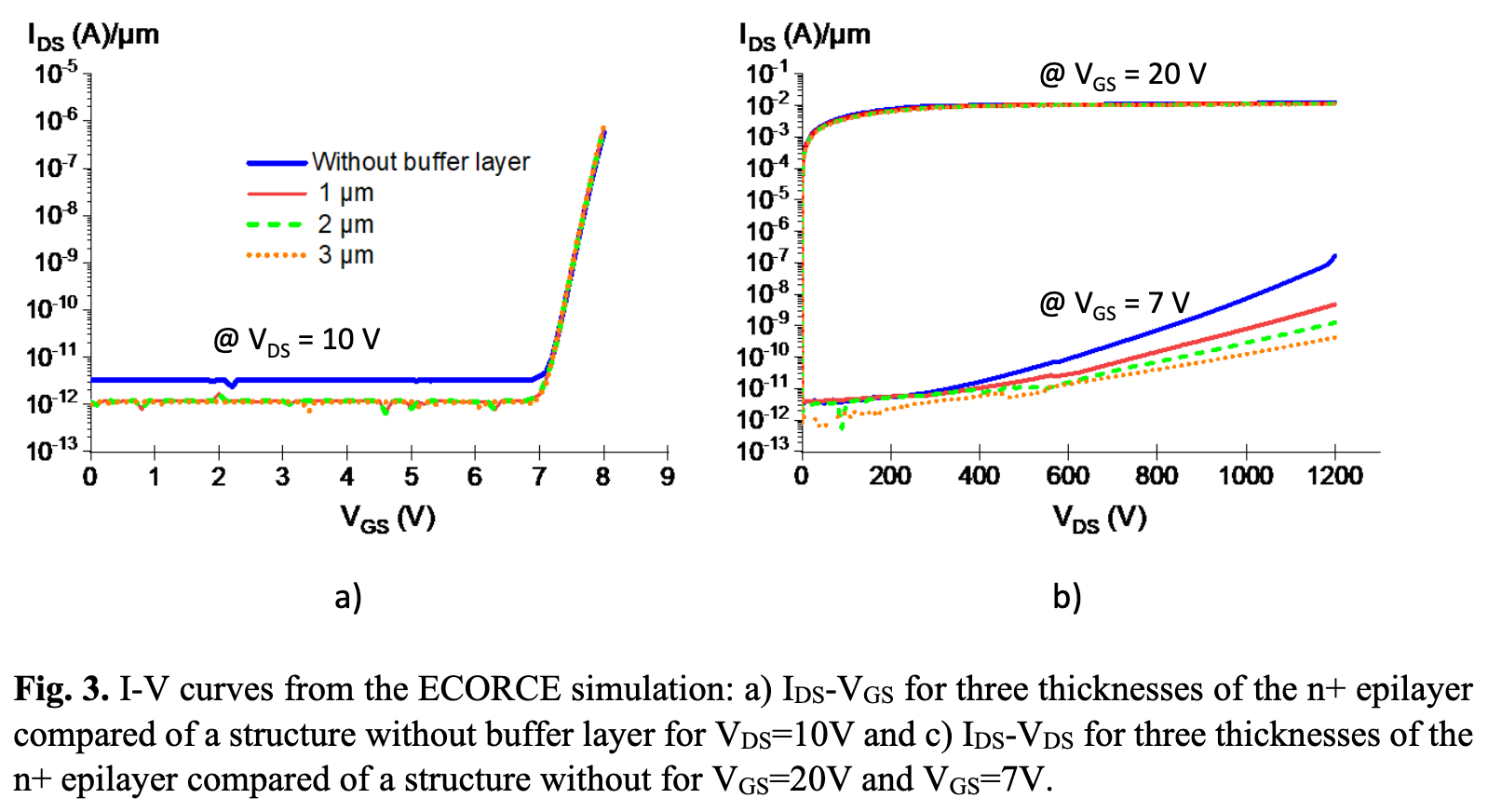
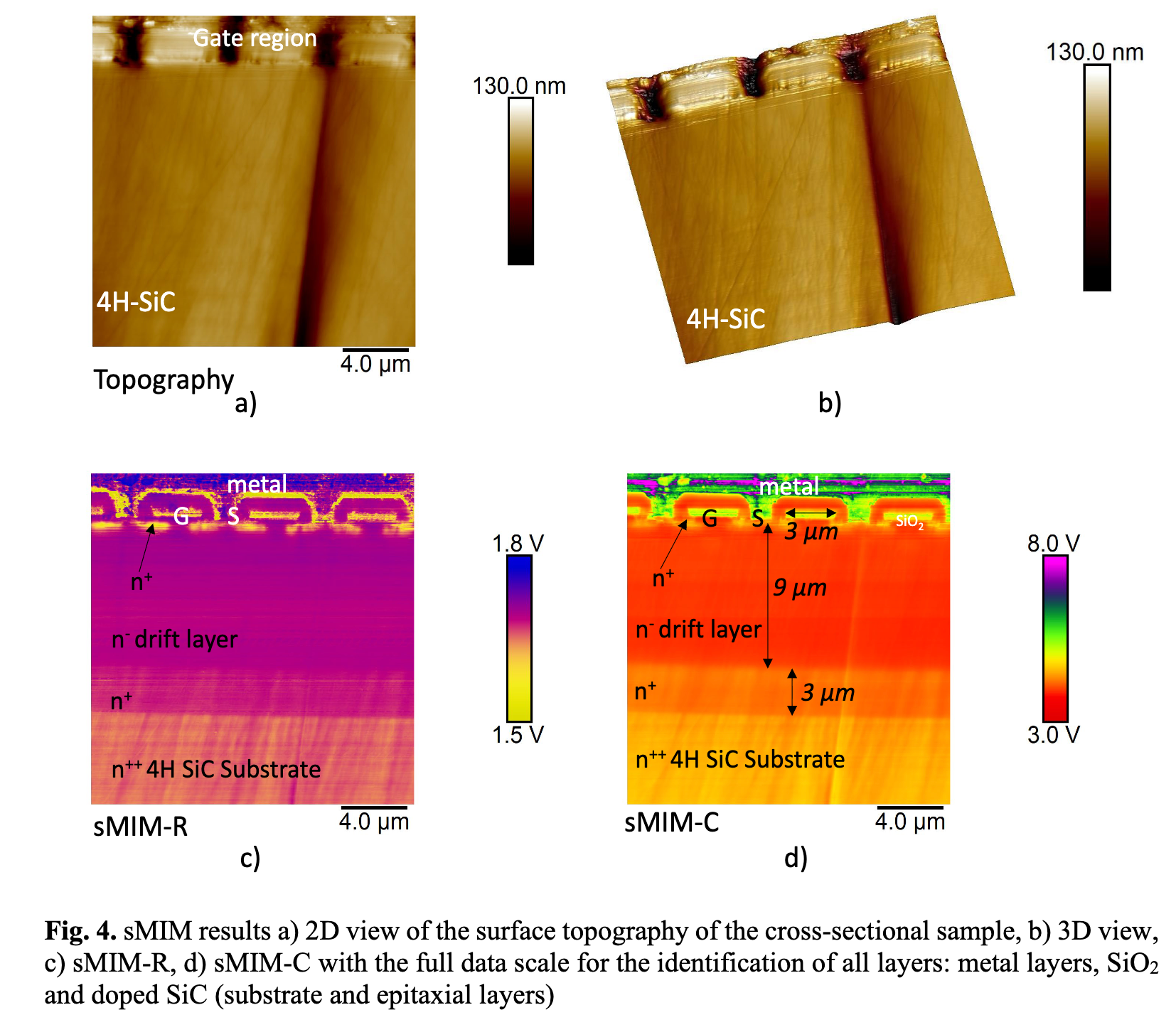
Due to the expansion of defects like single Shockley-type Stacking Faults inside the SiC epitaxialdrift layer, during high current stress, classical SiC MOSFETs can be victims of the degradation oftheir electrical characteristics. The introduction of an epitaxial SiC buffer layer between the substrateand the n- drift epilayer, called recombination-enhancing buffer layer, was shown to avoid thisdegradation. In this paper, TCAD simulations of the electrical behavior of such a commercial SiCMOSFET device with varying buffer layer thickness are studied, indicating only small modificationsof the electrical characteristics. These simulations are combined with the characterization of the localelectrical properties using an AFM-sMIM technique, allowing to determine the real thickness of thedifferent layers of the device. These measurements highlight an inhomogeneous conductivity in theSiC substrate, being probably compensated by the introduction of the SiC buffer layer.
Summary of the paper
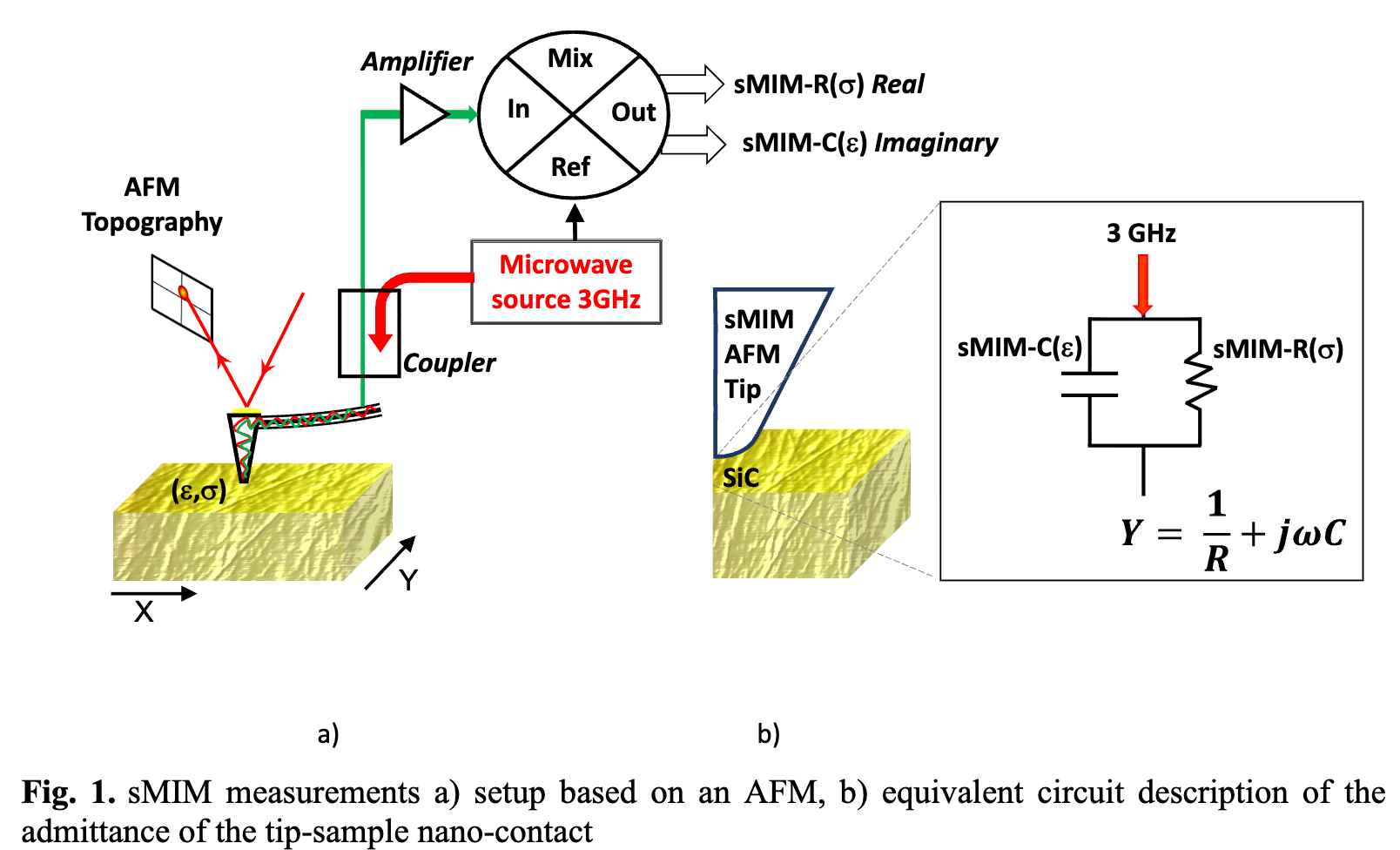
This paper investigates a recombination-enhancing buffer layer developed for bipolar-degradation-free SiC MOSFETs and evaluates its local electrical behavior by means of AFM-based scanning microwave impedance microscopy (AFM-sMIM).
The study combines surface topography with nanoscale electrical imaging, allowing the authors to examine how the buffer layer and adjacent semiconductor regions differ in their local microwave impedance response.
In the measurements, the analysis relies on both sMIM-R and sMIM-C signals, which provide complementary information related to local resistive and capacitive characteristics.
By correlating these signals with specific regions in the device structure, the work aims to clarify whether the engineered buffer layer exhibits the intended electrical function that supports improved SiC MOSFET performance.
The significance of the method is that sMIM can probe electrical contrast at the nanoscale in semiconductor materials and devices, making it useful for mapping local conductivity or permittivity variations that are difficult to resolve with conventional bulk measurements.
For this reason, the paper is valuable not only as a characterization study of a SiC power device structure, but also as an example of how sMIM can support semiconductor process verification, functional layer assessment, and reliability-oriented device analysis.
----------
技术价值
这篇论文聚焦于 SiC MOSFET 中“增强复合缓冲层”的局部电学表征,目标是服务于“无双极退化”的器件设计与分析。
研究中采用了 AFM-sMIM,也就是扫描微波阻抗显微镜,在获取表面形貌的同时同步读取局部电学信号,并重点使用了 sMIM-R 和 sMIM-C 两类响应。
从方法上看,SMIM 在这里的核心作用,是把缓冲层及其周边半导体区域的局部电学差异直接“成像”出来,从而帮助研究者判断该功能层是否实现了预期的电学设计。
就技术意义而言,sMIM 能同时测到与电容和电阻相关的局部响应,适用于导体、半导体和绝缘体,并且在半导体技术中常被用于掺杂分布表征和失效分析。
因此,把 sMIM 用到 SiC MOSFET 这类功率半导体器件上,价值就在于它不仅能看“结构长什么样”,还能看“局部电学状态是不是对的”,这对缓冲层优化、器件可靠性分析和工艺验证都很关键。
可以把这项技术的意义概括为:SMIM 为 SiC 功率器件中的功能层提供了纳米尺度的局部电学证据,使器件设计从“结构判断”进一步走向“电学实证”。
----------
原文链接:https://www.scientific.net/SSP.361.85

