

Complementary Two Dimensional Carrier Profiles of 4H-SiC MOSFETs by Scanning Spreading Resistance Microscopy and Scanning Capacitance Microscopy | 利用扫描扩展电阻显微镜(SSRM)与扫描电容显微镜(SCM)对4H-SiC MOSFET进行互补性二维载流子分布表征
Patrick Fiorenza, Marco Zignale, Edoardo Zanetti, Mario S. Alessandrino, Beatrice Carbone, Alfio Guarnera, Mario Saggio, Filippo Giannazzo, Fabrizio Roccaforte
Abstract
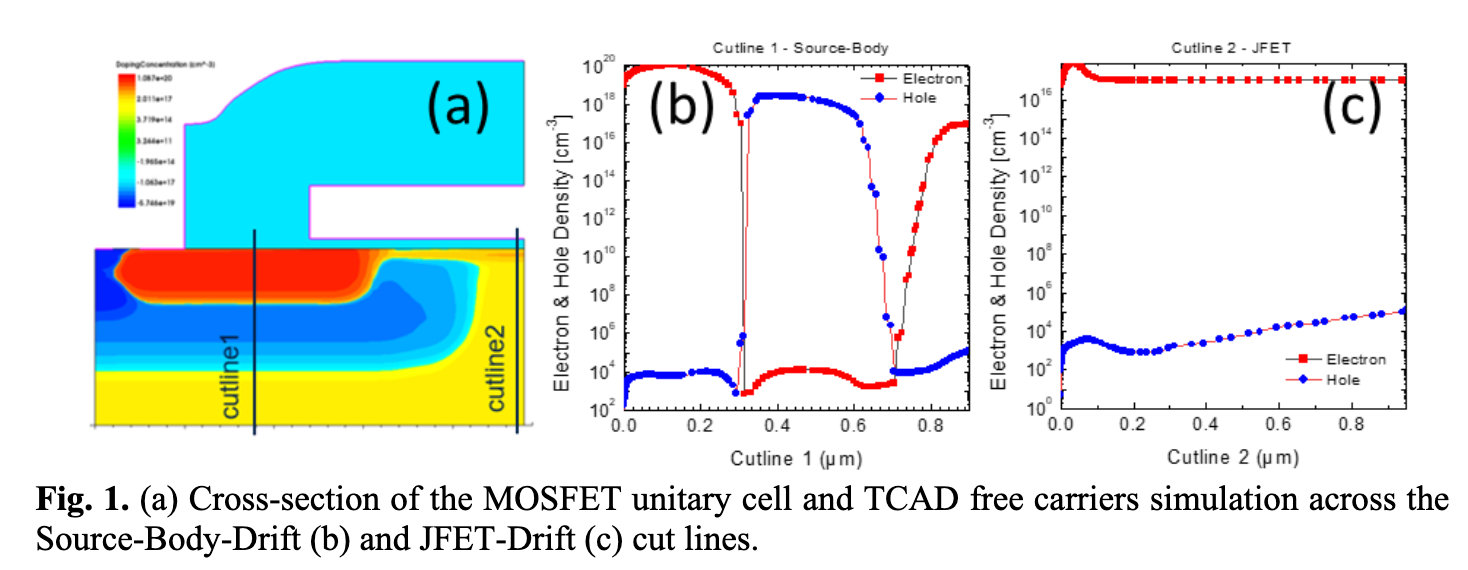
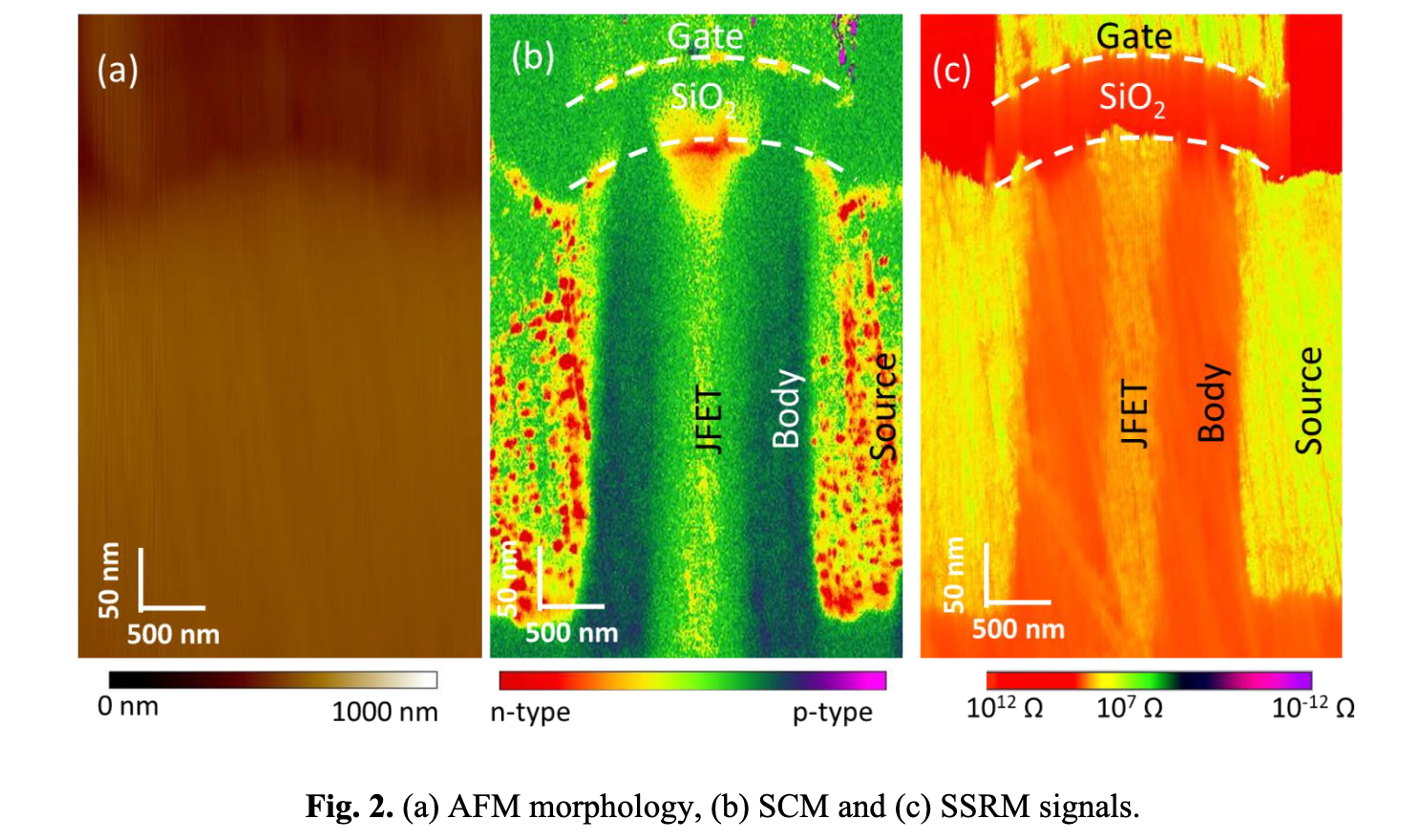
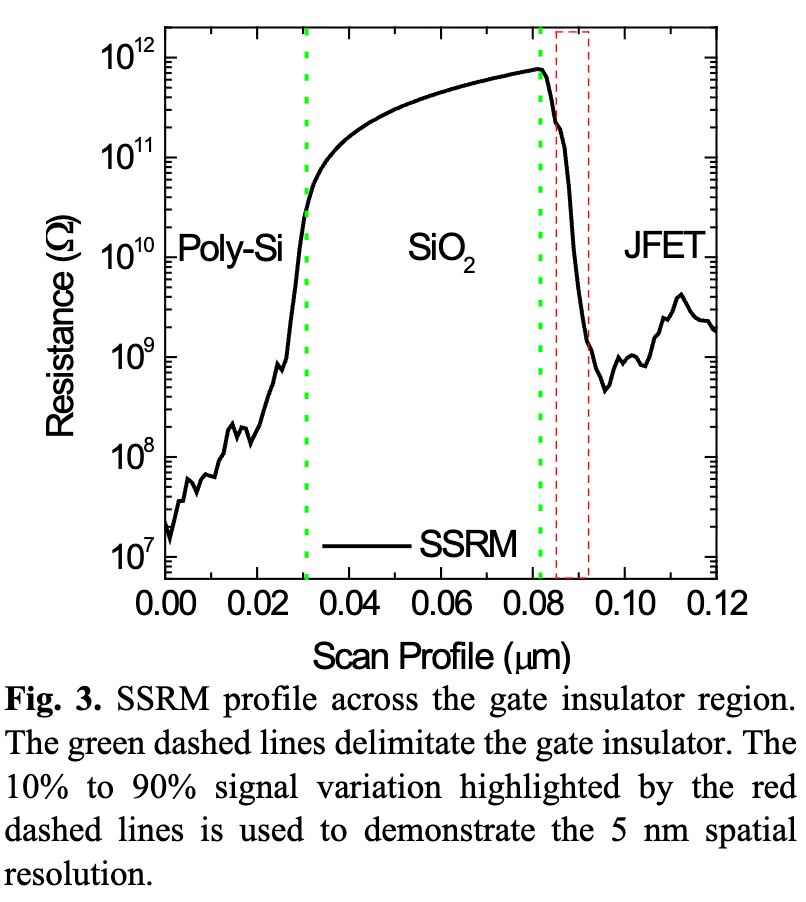
The suitability of scanning probe methods based on atomic force microscopy (AFM)measurements is explored to investigate with high spatial resolution the elementary cell of 4H-SiCpower MOSFETs. The two-dimensional (2D) cross-sectional maps demonstrated a high spatialresolution of about 5 nm using the scanning spreading resistance microscopy (SSRM) capabilities.Furthermore, the scanning capacitance microscopy (SCM) capabilities enabled visualizing thefluctuations of charge carrier concentration across the different parts of the MOSFETs elementarycell.
Summary of the Paper
This study investigates the suitability of scanning probe microscopy (SPM) techniques — specifically Scanning Spreading Resistance Microscopy (SSRM) and Scanning Capacitance Microscopy (SCM) — for two-dimensional (2D) carrier profiling of 4H-SiC power MOSFETs at the nanoscale. Using AFM-based methods, the authors systematically characterized the cross-sectional carrier distribution across the elementary cell of 4H-SiC MOSFETs, a wide-bandgap semiconductor of critical importance in modern power electronics.
SSRM delivered 2D cross-sectional resistance maps with a spatial resolution of approximately 5 nm, enabling direct visualization of the p-body, n-source, and n-drift regions within the device structure. The complementary use of SCM revealed fluctuations in charge carrier concentration across distinct regions of the MOSFET cell. The joint application of both techniques provided a more comprehensive picture than either method could offer alone.
The work was conducted in collaboration with STMicroelectronics, one of the world's leading SiC power device manufacturers, underscoring its direct industrial relevance. The results demonstrate that SSRM and SCM together constitute a powerful analytical toolkit for characterizing advanced power semiconductor devices at sub-10 nm resolution.
----------
SSRM的运用与技术价值
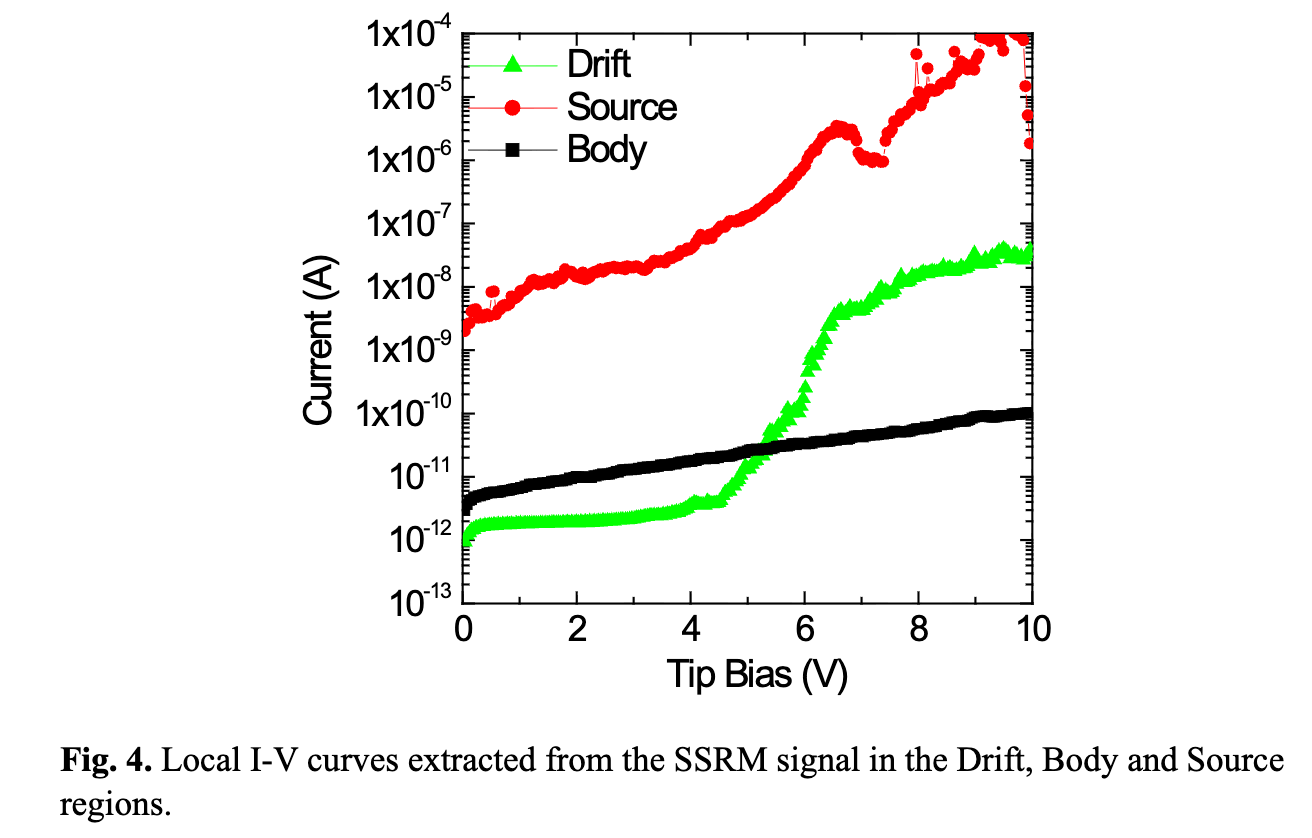
本研究中,SSRM被用于对4H-SiC功率MOSFET截面进行高分辨率的二维电阻分布成像。SSRM利用金刚石涂层导电探针直接接触样品截面,通过施加偏压并测量局部扩展电阻,最终重建出器件内部的电阻率分布图像。在本实验中,SSRM实现了约 5 nm 的空间分辨率,成功区分了MOSFET元胞中的p型体区(p-body)、n型源区(n-source)以及n型漂移区(n-drift region)等关键功能区域 。这一技术价值体现在以下几个层面:首先,SSRM能够在不依赖氧化层的前提下直接对SiC这类宽禁带半导体进行测量,克服了传统SCM方法对氧化层的依赖;其次,5 nm级的空间分辨率使其能够捕捉到器件内部的细微掺杂梯度,这对于优化SiC MOSFET的沟道设计和阈值电压控制具有重要意义;最后,与SCM的互补使用,进一步丰富了载流子浓度的定量信息,为功率器件的工艺验证与失效分析提供了强有力的手段 。
研究意义
该研究证明了SSRM可以作为一种可靠的2D表征工具,应用于以SiC为代表的下一代功率半导体器件的开发与工艺监控,具有显著的工业应用价值,特别是在STMicroelectronics等企业推进SiC器件量产的背景下意义尤为突出 。
----------
原文链接:https://www.scientific.net/SSP.358.45?

